
Offset Printing vs Digital Printing
Offset Printing vs Digital Printing: What’s the Difference and is it approved and Best?3126:In the modern printing industry, businesses, marketers, publishers, and creative professionals often face a crucial decision: Offset Printing vs Digital Printing. Choosing the right printing method can significantly impact your project’s quality, cost, turnaround time, and overall success.
Whether you’re printing business cards, brochures, catalogs, magazines, packaging materials, or marketing collateral, understanding the difference between offset and digital printing is essential. Both technologies offer unique advantages, and selecting the right one depends on your specific requirements. These comprehensive notes take the key differences, benefits, limitations, costs, applications, and factors to consider when choosing between offset printing and digital printing.
Businesses often compare traditional offset presses and modern digital print systems when selecting a printing solution. Factors such as cost, turnaround time, print quality, and customization capabilities influence the decision. Understanding the strengths of each technology helps organizations choose the most effective option for their projects.
What Is Offset Printing?
Offset printing is a traditional printing method that has been the industry standard for decades. It uses metal plates to transfer an image onto a rubber blanket, which then applies the image to the printing surface.
The term “offset” comes from the fact that the inked image is not transferred directly from the plate to the paper. Instead, it is first transferred (or offset) to a rubber cylinder and then printed onto the paper.
Offset printing is widely used for:
- Newspapers
- Magazines
- Books
- Catalogs
- Packaging
- Corporate brochures
- Large-volume marketing materials
Because of its exceptional quality and efficiency in high-volume production, offset printing remains a preferred choice for many commercial printing projects.
What Is Digital Printing?
Digital printing is a modern printing technology that transfers digital files directly onto paper or other materials without using printing plates.
Unlike offset printing, digital printing operates similarly to a high-end office printer but on a much larger and more sophisticated scale.
Digital printing is commonly used for:
- Business cards
- Flyers
- Posters
- Personalized marketing materials
- Short-run publications
- Direct mail campaigns
- Custom packaging
The ability to print directly from a digital file makes this method fast, flexible, and highly efficient for small to medium print runs.
How Offset Printing Works
The offset printing process involves several steps:
1. Design Preparation
The artwork is prepared digitally and separated into color components.
2. Plate Creation
Metal plates are created for each color used in the design.
3. Ink Application
Ink is applied to the printing plates.
4. Image Transfer
The image transfers from the plate to a rubber blanket.
5. Printing
The blanket transfers the image onto paper or another substrate.
6. Finishing
The printed material may undergo cutting, folding, binding, or coating.
This process delivers highly accurate and consistent print results, especially for large quantities.
How Digital Printing Works
Digital printing follows a much simpler workflow:
1. Digital File Upload
The design file is sent directly to the digital printer.
2. Image Processing
The printer processes the file electronically.
3. Direct Printing
The image is printed directly onto the material.
4. Finishing
The printed items may be trimmed, folded, laminated, or packaged. Since there are no plates involved, digital printing dramatically reduces setup time and costs.
Key Differences Between Offset Printing and Digital Printing
Understanding the distinctions between these two printing technologies helps businesses make informed decisions.
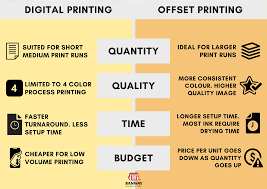
1. Printing Process
Offset Printing
- Requires metal plates
- Uses rubber blankets
- Involves a longer setup process
Digital Printing
- No plates required
- Prints directly from digital files
- Faster setup
Winner: Digital printing for speed and convenience.
2. Print Quality
One of the most debated topics is print quality.
Offset Printing Quality
Offset printing is known for:
- Sharp image reproduction
- Superior color accuracy
- Smooth gradients
- Crisp text
- Rich color consistency
Professional publishers and luxury brands often prefer offset printing due to its premium appearance.
Digital Printing Quality
Modern digital printers have improved significantly. Benefits include:
- High-resolution output
- Excellent color reproduction
- Consistent results
- Professional appearance
Offset printing still maintains a slight advantage for ultra-high-quality projects. Winner: Offset printing.
3. Cost Efficiency
Cost plays a major role in printing decisions.
Offset Printing Costs
Offset printing has:
- Higher setup costs
- Plate production expenses
- Longer preparation time
The cost per unit decreases significantly as quantities increase.
Digital Printing Costs
Digital printing offers:
- No plate costs
- Minimal setup expenses
- Affordable short-run printing
For small quantities, digital printing is typically more economical. Winner: Depends on quantity.
- Small runs: Digital printing
- Large runs: Offset printing
4. Print Volume
Offset Printing
Ideal for:
- Thousands of copies
- Large commercial jobs
- Mass production campaigns
The more you print, the more cost-effective offset becomes.
Digital Printing
Best for:
- Small batches
- Limited editions
- On-demand printing
Winner: Offset printing for large-volume jobs.
5. Turnaround Time
Businesses often need fast printing solutions.
Offset Printing
Requires:
- Plate creation
- Press setup
- Calibration
This results in longer production times.
Digital Printing
Offers:
- Instant file processing
- Quick setup
- Rapid production
Perfect for urgent projects.
Winner: Digital printing.
6. Customization and Personalization
Modern marketing increasingly relies on personalization.
Offset Printing
Customization is limited because changing information requires new plates.
Digital Printing
Variable data printing allows:
- Personalized names
- Unique offers
- Individualized QR codes
- Customized graphics
This capability makes digital printing extremely valuable for targeted marketing campaigns.
Winner: Digital printing.
7. Color Matching
Color consistency is critical for branding.
Offset Printing
Uses Pantone Matching System (PMS) colors for precise reproduction.
Benefits include:
- Accurate brand colors
- Consistent results
- Superior color control
Digital Printing
Typically uses CMYK color systems. Although excellent, exact Pantone matching can sometimes be challenging. Winner: Offset printing.
8. Material Compatibility
Offset Printing
Supports:
- Paper
- Cardboard
- Packaging materials
- Specialty stocks
Digital Printing
Also handles many materials but may have limitations depending on equipment.
Winner: Offset printing for maximum versatility.
Advantages of Offset Printing
Offset printing remains a powerhouse in commercial printing for several reasons.
Superior Print Quality
Offset printing produces:
- Rich colors
- Sharp details
- High-definition images
Lower Cost for Large Runs
As quantity increases, the cost per piece decreases significantly.
Accurate Color Reproduction
Perfect for:
- Corporate branding
- Luxury packaging
- Professional publications
Wide Material Selection
Offset presses accommodate numerous paper types and finishes.
Consistent Results
Every print remains virtually identical from start to finish.
Disadvantages of Offset Printing
Despite its strengths, offset printing has limitations.
Higher Initial Costs
Plate production increases startup expenses.
Longer Setup Time
Preparing plates and calibrating presses requires time.
Less Flexible
Making changes after setup can be costly.
Not Ideal for Small Quantities
Short runs often become expensive.
Advantages of Digital Printing
Digital printing has transformed the printing industry through speed and flexibility.
Fast Turnaround
Projects can be completed quickly.
Lower Setup Costs
No plates are needed.
Personalization Capabilities
Variable data printing enables customized content.
On-Demand Printing
Businesses can print exactly what they need.
Reduced Waste
Short runs minimize excess inventory.
Disadvantages of Digital Printing
Digital printing also has certain drawbacks.
Higher Cost per Unit for Large Runs
Large-volume projects may become expensive.
Limited Color Matching
Pantone accuracy may vary.
Slightly Lower Quality for Premium Projects
Offset printing often achieves better image depth and detail.
Material Restrictions
Some specialty substrates may not be compatible.
When Should You Choose Offset Printing?
Offset printing is the best choice when:
You Need Large Quantities
Examples:
- 10,000 brochures
- 50,000 flyers
- Magazine production
Color Accuracy Is Essential
Ideal for:
- Brand-sensitive materials
- Luxury packaging
- Corporate identity projects
Premium Quality Is Required
Perfect for:
- High-end catalogs
- Art books
- Professional publications
Cost Efficiency Matters at Scale
Large print runs significantly reduce unit costs.
When Should You Choose Digital Printing?
Digital printing is ideal when:
You Need Fast Delivery
Suitable for urgent projects.
Quantities Are Small
Examples:
- 100 business cards
- 250 flyers
- Limited-edition products
Personalization Is Important
Useful for:
- Direct mail campaigns
- Event invitations
- Customer-specific marketing
Frequent Updates Are Needed
Digital files can be modified instantly.
Offset Printing vs Digital Printing: Side-by-Side Comparison
| Feature | Offset Printing | Digital Printing |
| Setup Cost | High | Low |
| Print Quality | Excellent | Very Good |
| Turnaround Time | Slower | Faster |
| Large Volumes | Excellent | Moderate |
| Small Volumes | Less Economical | Highly Economical |
| Personalization | Limited | Excellent |
| Color Accuracy | Outstanding | Good |
| Material Variety | Extensive | Moderate |
| Cost per Unit (Large Runs) | Low | Higher |
| Variable Data Printing | No | Yes |
Industries That Prefer Offset Printing
Many industries rely heavily on offset printing:
Publishing Industry
- Books
- Newspapers
- Magazines
Packaging Industry
- Product boxes
- Labels
- Retail packaging
Corporate Sector
- Annual reports
- Marketing brochures
- Brand materials
Advertising Agencies
- Large-scale promotional campaigns
Industries That Prefer Digital Printing
Digital printing is increasingly popular across multiple sectors.
Small Businesses
- Business cards
- Flyers
- Promotional materials
E-commerce Brands
- Custom packaging
- Personalized inserts
Event Management
- Invitations
- Tickets
- Signage
Direct Mail Marketing
- Personalized campaigns
- Variable data printing
Future Trends in Printing Technology
The printing industry continues to evolve rapidly.
Emerging trends include:
AI-Powered Print Automation
Artificial intelligence is streamlining workflows and improving efficiency.
Sustainable Printing
Environmentally friendly inks and materials are becoming standard.
Hybrid Printing Solutions
Many companies now combine offset and digital printing for maximum efficiency.
Enhanced Personalization
Data-driven marketing is increasing the demand for customized printing.
Smart Packaging
Interactive packaging with QR codes and digital integration is growing rapidly. The debate between Offset Printing vs Digital Printing does not have a one-size-fits-all answer. The best choice depends on your project’s goals, budget, timeline, quantity, and quality expectations. Choose offset printing if you need exceptional print quality, precise color matching, and large-volume production at a lower per-unit cost. Choose digital printing if you need quick turnaround times, personalized content, lower setup costs, and short-run flexibility.
Both technologies play a vital role in today’s printing industry. By understanding their strengths and limitations, businesses can select the most effective solution for achieving outstanding results while maximizing return on investment. For modern marketers, publishers, and business owners, mastering the differences between offset and digital printing is the key to creating impactful, professional, and cost-effective printed materials that leave a lasting impression.
Latest Trends and Updates in Offset Printing vs Digital Printing (2026)
The printing industry continues to evolve rapidly, with both offset printing and digital printing adapting to new technologies, sustainability demands, and changing customer expectations. In 2026, businesses are no longer choosing one method over the other solely based on cost. Instead, factors such as personalization, environmental impact, automation, and production speed play a significant role in decision-making.
Growth of Digital Printing Technology
Digital printing has experienced remarkable growth over the past few years. Modern digital presses now offer higher resolutions, improved color accuracy, and faster production speeds than ever before. Technologies from leading manufacturers have narrowed the quality gap between digital and offset printing, making digital solutions suitable for a wider range of commercial applications.One of the biggest advantages driving digital printing adoption is variable data printing (VDP).
FAQs.
1. What is the main difference between offset printing and digital printing?
The primary difference is the printing process. Offset printing uses metal plates and rubber blankets to transfer ink onto paper, while digital printing prints directly from a digital file without requiring plates. Offset is ideal for large print runs, whereas digital printing is better for smaller, faster jobs.
2. Which printing method offers better quality?
Offset printing generally delivers superior image quality, sharper details, smoother color gradients, and more accurate color reproduction. However, modern digital printers produce excellent results that are suitable for most business and marketing materials.
3. Is digital printing cheaper than offset printing?
For small quantities, digital printing is usually more affordable because there are no plate creation or setup costs. For large-volume projects, offset printing becomes more cost-effective due to its lower per-unit printing cost.
4. When should I choose offset printing?
Offset printing is the best choice when you need large quantities, precise color matching, premium print quality, or specialized paper stocks. It is commonly used for magazines, catalogs, books, and corporate brochures.
5. When should I choose digital printing?
Digital printing is ideal for short runs, quick turnaround projects, personalized marketing materials, and on-demand printing. It works well for business cards, flyers, postcards, and customized promotional products.
6. What is the minimum quantity recommended for offset printing?
There is no strict minimum, but offset printing becomes economically beneficial when printing several hundred or thousands of copies. Small orders may not justify the setup costs involved.
7. Can digital printing match Pantone colors?
Digital printing can reproduce colors very accurately, but exact Pantone color matching may be limited depending on the printer and technology used. Offset printing remains the preferred option for precise brand color consistency.
8. Which printing method is faster?
Digital printing is significantly faster because it does not require plate production or lengthy setup processes. Files can be sent directly to the printer, making it ideal for urgent projects.
9. Is offset printing environmentally friendly?
Modern offset printing has become more eco-friendly through the use of sustainable inks, recycled papers, and waste-reduction technologies. However, setup processes can generate more waste than digital printing.
10. Does digital printing produce less waste?
Yes. Since digital printing allows on-demand production and requires minimal setup, it generally produces less waste and reduces the risk of overprinting unnecessary materials.
11. Can offset printing handle large-scale commercial projects?
Absolutely. Offset printing is specifically designed for high-volume production. It efficiently prints thousands or even millions of copies while maintaining consistent quality throughout the run.
12. What types of products are commonly printed using offset printing?
Offset printing is widely used for:
- Newspapers
- Magazines
- Books
- Catalogs
- Packaging
- Brochures
- Annual reports
- Marketing materials
These projects often require high quality and large quantities.
13. What products are best suited for digital printing?
Digital printing is ideal for:
- Business cards
- Flyers
- Posters
- Personalized direct mail
- Invitations
- Short-run booklets
- Event materials
- Custom packaging
It offers flexibility and speed for smaller projects.
14. Can digital printing support personalized printing?
Yes. One of digital printing’s biggest advantages is variable data printing, which allows each printed piece to contain unique information such as names, addresses, QR codes, images, or promotional offers.
15. Which method offers better color consistency?
Offset printing generally provides superior color consistency, especially for large print runs. Once the press is calibrated, every copy maintains nearly identical color accuracy from beginning to end.
16. Is digital printing suitable for luxury brands?
Digital printing can produce high-quality results suitable for many premium applications. However, luxury brands often prefer offset printing because of its exceptional color precision, image quality, and finishing options.
17. How does paper selection differ between offset and digital printing?
Offset printing supports a wider range of paper types, textures, and specialty materials. Digital printing also accommodates many paper stocks but may have limitations depending on the printer model and substrate compatibility.
18. Can I make changes during the printing process?
Digital printing allows easy file updates before printing and is highly flexible for revisions. Offset printing requires new plates if significant changes are made, which can increase costs and production time.
19. Which printing method is better for marketing campaigns?
The answer depends on the campaign size. Digital printing is excellent for personalized and targeted marketing campaigns, while offset printing is more economical for mass-distribution campaigns requiring thousands of copies.
20. What is the future of offset and digital printing?
Both technologies continue to evolve and remain important in the printing industry. Digital printing is growing due to demand for personalization and quick turnaround times, while offset printing remains the top choice for large-scale, high-quality commercial production. Many businesses now use a hybrid approach, combining the strengths of both methods to achieve optimal results.
Understanding the differences between offset printing and digital printing helps businesses choose the most effective solution for their printing needs. Offset printing excels in high-volume production, superior color accuracy, and premium print quality, while digital printing offers speed, flexibility, customization, and cost-effective short runs. By evaluating your budget, timeline, quantity, and quality requirements, you can select the printing method that delivers the best value and results for your project.