
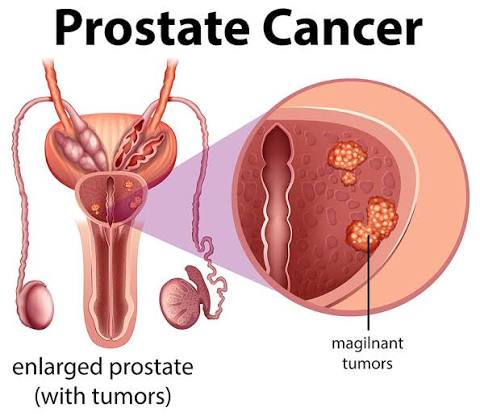
Prostate cancer is one of the most common cancers affecting men. It develops when cells in the prostate gland begin to grow abnormally and uncontrollably. In many men, prostate cancer grows slowly and may never cause serious problems. Some forms can grow aggressively and spread to other parts of the body.
What Is Prostate Cancer?
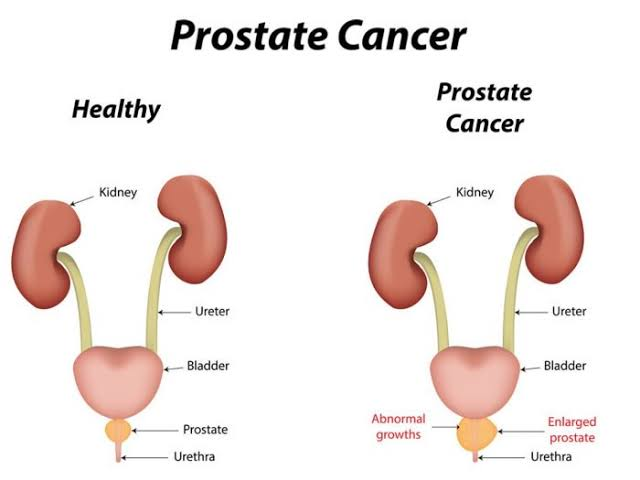
The prostate is a small gland located below the bladder and in front of the rectum. It surrounds part of the urethra and produces fluid that contributes to semen. Prostate cancer occurs when cells in the prostate acquire genetic changes that allow them to multiply abnormally.
What happens in prostate cancer?
- Normal prostate cells grow and divide in a controlled manner.
- Genetic changes can disrupt this normal control.
- Abnormal cells may form a tumor.
- Some prostate cancers remain confined to the prostate for many years.
- More aggressive cancers can invade nearby tissues.
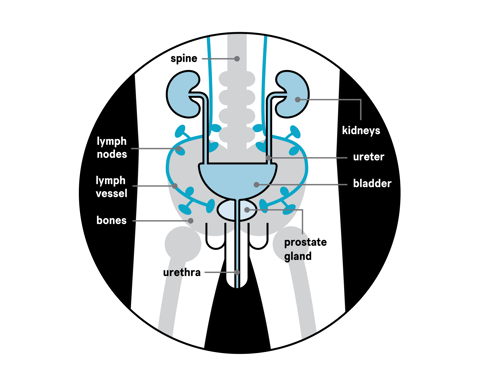
- Cancer cells can enter blood or lymphatic vessels and spread to distant organs.
- Prostate cancer commonly spreads to bones and lymph nodes when it becomes advanced.
What Causes Prostate Cancer?
There is no single cause that explains every case of prostate cancer.
Researchers believe that age, inherited genetics, family history, hormonal factors, environmental influences, and other biological factors can contribute to the development of the disease.
Why does prostate cancer occur?
The exact mechanism varies between individuals, but several factors are strongly associated with increased risk:
- Increasing age: Risk rises substantially as men get older.
- Family history: Having a father or brother with prostate cancer can increase risk.
- Inherited genetic mutations: Changes involving genes such as BRCA1, BRCA2, ATM, and other DNA-repair genes can be associated with higher risk.
- Ancestry: Prostate cancer incidence and mortality differ between populations.
- Obesity and metabolic health: Obesity has been associated particularly with more aggressive prostate cancer in some studies.
- Diet and lifestyle: Dietary patterns, physical inactivity, and other lifestyle factors may influence overall cancer risk, although no single food has been proven to prevent prostate cancer.
- Hormonal biology: Prostate cells depend partly on androgen hormones, including testosterone and dihydrotestosterone (DHT), which is why hormonal pathways are important in prostate cancer treatment.
Importantly, having a risk factor does not mean a person will definitely develop cancer.
Prostate Cancer Symptoms
Early prostate cancer frequently causes no symptoms. This is one reason discussions about risk and appropriate screening are important. When symptoms occur, they may include:
- Difficulty starting urination.
- Weak or interrupted urine flow.
- Frequent urination, especially at night.
- A feeling that the bladder has not completely emptied.
- Urgency to urinate.
- Blood in the urine.
- Blood in semen.
- Pain or burning during urination in some cases.
- Erectile or sexual difficulties in some men.
- Pain in the back, hips, pelvis, or bones in advanced disease.
- Unexplained weight loss or weakness in advanced cancer.
Are urinary symptoms always prostate cancer?

No.
Benign prostatic hyperplasia (BPH), urinary infections, prostatitis, bladder conditions, medications, and other problems can cause similar urinary symptoms. Urinary symptoms should not automatically be interpreted as cancer.
Prostate Cancer vs. Enlarged Prostate
An enlarged prostate, medically called benign prostatic hyperplasia (BPH), is extremely common with aging.
The important difference is:
- BPH is not prostate cancer.
- BPH does not itself mean that cancer is present.
- Both BPH and prostate cancer can cause urinary symptoms.
- Medical evaluation may be needed when symptoms are persistent, severe, or unusual.
How Is Prostate Cancer Diagnosed?
Doctors generally use several pieces of information rather than relying on one test.
1. PSA Blood Test
The prostate-specific antigen (PSA) test measures PSA in the blood. An elevated PSA can occur because of:
- Prostate cancer.
- Benign prostate enlargement.
- Prostate inflammation or infection.
- Recent prostate-related procedures.
- Other prostate conditions.
A high PSA does not automatically mean cancer.
Doctors may consider PSA level, PSA trends, age, family history, prostate examination, medications, and other factors when deciding whether additional testing is appropriate.
2. Digital Rectal Examination
During a digital rectal examination (DRE), a healthcare professional examines the prostate through the rectum. The examination can identify certain abnormalities, although it cannot diagnose prostate cancer by itself.
3. MRI
Multiparametric MRI (mpMRI) has become an important tool in modern prostate cancer evaluation. It can help:
- Identify suspicious areas.
- Determine whether a biopsy may be useful.
- Guide targeted biopsy.
- Assess the extent of known disease in appropriate situations.
4. Prostate Biopsy
A biopsy involves removing small samples of prostate tissue for examination under a microscope. A pathologist determines whether cancer cells are present and evaluates their characteristics.
Understanding Gleason Grade and Grade Group
Not all prostate cancers behave in the same way. Pathologists assess how abnormal the cancer cells appear and how they are arranged. The Gleason grading system and modern Grade Group system help doctors estimate how aggressive the cancer may be.
Grade Groups generally range from:
- Grade Group 1: Gleason score 6.
- Grade Group 2: Gleason score 7 (3+4).
- Grade Group 3: Gleason score 7 (4+3).
- Grade Group 4: Gleason score 8.
- Grade Group 5: Gleason scores 9–10.
A higher-Grade Group generally indicates a greater likelihood of aggressive behavior.
Prostate Cancer Stages
Staging describes how far the cancer has spread.
Localized prostate cancer
The cancer is confined to the prostate.
Locally advanced prostate cancer
The cancer has grown outside the prostate into nearby structures but has not necessarily spread to distant organs.
Metastatic prostate cancer
The cancer has spread to distant parts of the body.
The bones and lymph nodes are common sites of metastatic prostate cancer.
Doctors may use imaging such as MRI, CT, bone imaging, or PSMA PET in selected patients to determine whether cancer has spread.
Prostate Cancer Treatment
Treatment depends on several factors, including:
- Cancer stage.
- Grade Group.
- PSA level.
- MRI and biopsy findings.
- Overall health.
- Age and life expectancy.
- Patient preferences.
- Genetic and molecular characteristics in selected advanced cases.
There is no single best treatment for every patient.
Active Surveillance
For some men with low-risk prostate cancer, immediate surgery or radiation may not be necessary. Active surveillance involves carefully monitoring the cancer through scheduled tests and examinations. Monitoring may involve:
- PSA testing.
- Repeat MRI when appropriate.
- Physical examination.
- Repeat biopsy in selected situations.
If evidence shows that the cancer is becoming more concerning, treatment can then be considered.
Why choose active surveillance?
The goal is to avoid or delay treatment side effects while maintaining the opportunity for effective treatment if the cancer shows signs of progression.
Surgery
A radical prostatectomy removes the prostate and, when appropriate, surrounding tissues.
Surgery can be performed using open or minimally invasive techniques, including robotic-assisted approaches.
Potential side effects include:
- Urinary incontinence.
- Erectile dysfunction.
- Changes in ejaculation and fertility.
Radiation Therapy
Radiation can be used to treat localized or locally advanced prostate cancer. Types include:
- External-beam radiation therapy.
- Stereotactic radiation approaches in selected patients.
- Brachytherapy, in which radioactive sources are placed in or near the prostate.
Radiation can also be used to relieve symptoms from cancer that has spread to bones.
Hormone Therapy
Many prostate cancers depend on male sex hormones called androgens for growth.
Androgen deprivation therapy (ADT) reduces androgen stimulation of prostate cancer cells.
Modern treatment for advanced disease may combine ADT with additional medicines, such as androgen-receptor pathway inhibitors. Examples of drugs used in appropriate patients include:
- Abiraterone.
- Enzalutamide.
- Apalutamide.
- Darolutamide.
The appropriate medicine depends on the patient’s disease characteristics and medical condition.
Chemotherapy
Chemotherapy may be recommended for some patients, particularly those with advanced or metastatic disease.
Docetaxel is one chemotherapy drug used in prostate cancer treatment.
Chemotherapy decisions are individualized and may be combined with hormone-based treatment in appropriate patients.
Targeted and Precision Treatments
Research and modern oncology have increasingly focused on matching treatment to the biological characteristics of a patient’s cancer. For selected patients with specific genetic alterations, treatments may include PARP inhibitors or other targeted approaches. This is particularly relevant when tumors contain abnormalities in DNA-repair pathways.
Radioligand Therapy
One of the important developments in advanced prostate cancer treatment is PSMA-targeted radioligand therapy. These treatments use a molecule that targets prostate-specific membrane antigen (PSMA) and delivers radiation directly to cancer cells.
Lutetium-177–PSMA-directed therapy has become an important treatment option for appropriately selected patients with advanced disease. Availability and eligibility depend on the patient’s cancer characteristics and local regulatory approvals.
What Can Men Do to Reduce Their Risk?
There is no guaranteed way to prevent prostate cancer. Maintaining overall health may be beneficial.
Healthy habits include:
- Maintain a healthy body weight.
- Exercise regularly.
- Eat a diet rich in vegetables, fruits, whole grains, and other minimally processed foods.
- Limit excessive intake of processed meats and highly processed foods.
- Avoid smoking.
- Limit excessive alcohol consumption.
- Control blood pressure, cholesterol, and other cardiovascular risk factors.
- Discuss family history with a doctor.
- Consider genetic counseling/testing when there is a strong family history or other indications.
It is important to avoid claims that a particular supplement, herb, or food can cure or reliably prevent prostate cancer. Evidence for many supplements marketed for prostate health is limited.
When Should You See a Doctor?
Talk to a healthcare professional if you experience:
- Persistent difficulty urinating.
- Blood in urine or semen.
- New unexplained urinary changes.
- Persistent pelvic or back pain.
- Unexplained weight loss.
- A strong family history of prostate cancer.
- A close relative diagnosed with prostate cancer at a young age.
- A previously abnormal PSA result.
Seek urgent medical attention
Severe weakness, loss of bladder or bowel control, numbness around the groin, or sudden severe back pain can occasionally indicate serious spinal complications in someone with advanced cancer and require urgent medical assessment.
Prostate Cancer Screening: What You Should Know
There is no universal screening schedule that is appropriate for every man.
PSA testing can detect prostate cancer earlier, but screening also has potential harms, including:
- False-positive results.
- Anxiety.
- Unnecessary biopsies.
- Detection of cancers that may never have caused symptoms.
- Treatment side effects such as urinary, sexual, and bowel problems.
For this reason, many major medical organizations recommend shared decision-making. A man should discuss his individual risk and the potential benefits and harms of PSA screening with his healthcare professional. Men at higher risk, such as those with a strong family history or certain inherited genetic mutations, may need earlier or more individualized discussions.
Latest Areas of Prostate Cancer Research
Research at major cancer centers, universities, and academic hospitals worldwide is increasingly focused on:
- Earlier and more accurate detection.
- MRI-guided and targeted biopsy.
- PSMA PET imaging.
- Liquid biopsy and blood-based biomarkers.
- Genetic testing and precision oncology.
- New androgen-receptor therapies.
- PARP inhibitors for selected genetic profiles.
- PSMA-targeted radioligand therapies.
- Better combinations of radiation, hormone therapy, immunotherapy, and targeted treatment.
- Understanding treatment resistance.
- Improving quality of life and reducing treatment complications.
Major institutions involved in prostate cancer research include leading academic and cancer centers such as Mayo Clinic, Cleveland Clinic, Johns Hopkins Medicine, Memorial Sloan Kettering Cancer Center, MD Anderson Cancer Center, Dana-Farber Cancer Institute, the University of Michigan, and other international research centers.
Is prostate cancer curable?
Many localized prostate cancers are highly treatable and may be cured, particularly when detected before they spread. Advanced metastatic prostate cancer is generally managed as a long-term disease, although modern treatments can significantly control it and extend survival for many patients.
Can prostate cancer cause death?
Yes. Aggressive or metastatic prostate cancer can be life-threatening. However, many prostate cancers grow slowly and have an excellent prognosis.
Does prostate cancer always cause symptoms?
No. Early prostate cancer often causes no symptoms.
Can an enlarged prostate become prostate cancer?
BPH and prostate cancer are different conditions. Having BPH does not mean that BPH turns into cancer.
Can prostate cancer spread?
Yes. Advanced prostate cancer can spread to lymph nodes, bones, and other organs.
Is PSA alone enough to diagnose prostate cancer?
No. PSA is a risk-assessment and detection tool, not a definitive cancer diagnosis. Doctors may use MRI, examination, and biopsy to establish a diagnosis.
Prostate cancer is a complex disease with very different forms and levels of aggressiveness. Some cancers can be safely monitored, while others require surgery, radiation, hormone therapy, chemotherapy, targeted therapy, radioligand therapy, or combinations of these treatments.
The most important steps are understanding individual risk, discussing appropriate PSA testing with a healthcare professional, investigating persistent or concerning symptoms, and obtaining specialist advice when cancer is suspected or diagnosed.
For anyone diagnosed with prostate cancer, treatment decisions should be based on the stage, Grade Group, PSA level, imaging, biopsy findings, overall health, genetic characteristics when relevant, and personal preferences rather than on a generic treatment recommendation found online.
Suggested authoritative sources for verification and further reading: National Cancer Institute (NCI), National Comprehensive Cancer Network (NCCN), American Cancer Society (ACS), European Association of Urology (EAU), American Urological Association (AUA), Memorial Sloan Kettering Cancer Center, Johns Hopkins Medicine, Mayo Clinic, MD Anderson Cancer Center, and peer-reviewed research published in major oncology and urology journals.
Prostate cancer is a common cancer in men, but it does not behave the same way in every person. Some prostate cancers grow slowly and may only require careful monitoring, while others can grow aggressively and spread to other parts of the body. Understanding the symptoms, causes, diagnosis, screening, treatment options, and risk factors can help patients have more informed conversations with their doctors.
1. What is prostate cancer?
Prostate cancer is a cancer that begins in the prostate gland, a small gland located below the bladder and in front of the rectum. The prostate helps produce fluid that forms part of semen. Prostate cancer develops when prostate cells acquire changes that cause them to grow and divide uncontrollably.
Key points include:
- Prostate cancer is one of the most common cancers affecting men.
- Many prostate cancers grow relatively slowly.
- Some cancers are more aggressive and can spread outside the prostate.
- Advanced prostate cancer commonly spreads to bones and lymph nodes.
- Early prostate cancer may cause no noticeable symptoms.
- The outlook depends heavily on the cancer’s stage, grade, PSA level, and other characteristics.
Importantly, a diagnosis of prostate cancer does not automatically mean that immediate surgery or chemotherapy is necessary. Treatment depends on the individual cancer.
2. What are the symptoms of prostate cancer?
Early prostate cancer often has no symptoms. When symptoms occur, they can be similar to those caused by benign prostate enlargement (BPH) or other urinary conditions.
Possible symptoms include:
- Difficulty starting urination.
- Weak or interrupted urine flow.
- Frequent urination.
- Increased need to urinate during the night.
- Difficulty completely emptying the bladder.
- Blood in the urine.
- Blood in semen.
- Burning or discomfort during urination in some cases.
- Erectile or sexual difficulties.
- Persistent pain in the back, hips, pelvis, or bones in advanced disease.
- Unexplained weight loss or weakness in advanced disease.
These symptoms do not prove that someone has prostate cancer. BPH, urinary infections, prostatitis, medications, and other conditions can cause similar problems. Men with persistent or unexplained urinary symptoms should discuss them with a healthcare professional rather than trying to determine the cause themselves.
3. What causes prostate cancer?
There is no single known cause of prostate cancer. Researchers believe that prostate cancer results from a combination of genetic and biological changes together with factors that influence cancer risk. Important risk factors include:
- Age: Risk increases substantially as men get older.
- Family history: A father or brother with prostate cancer can increase risk.
- Inherited genetic changes: Certain mutations, including changes involving BRCA1, BRCA2, and other DNA-repair genes, can increase risk.
- Ancestry: Prostate cancer risk varies among different populations.
- Obesity: Higher body weight has been associated with some forms of aggressive prostate cancer.
- Lifestyle and metabolic factors: Overall health, physical activity, and dietary patterns may influence risk.
Having one or more risk factors does not mean that a person will definitely develop prostate cancer.
4. How is prostate cancer diagnosed?
Doctors generally use multiple pieces of information rather than relying on a single test. The evaluation may include:
PSA blood test
PSA, or prostate-specific antigen, is a substance produced by prostate cells. An elevated PSA can occur with prostate cancer, but also with BPH, inflammation, infection, or other prostate conditions.
High PSA does not automatically mean cancer.
Digital rectal examination
A healthcare professional may examine the prostate through the rectum to identify abnormalities.
MRI
Multiparametric MRI can identify areas of the prostate that appear suspicious and can help doctors decide whether a biopsy is appropriate.
Biopsy
A prostate biopsy removes small tissue samples for microscopic examination. A pathologist can determine whether cancer is present and assess its grade.
The combination of PSA, examination, imaging, biopsy results, and other clinical information helps doctors establish the diagnosis and determine appropriate treatment.
5. What is the PSA test, and does a high PSA mean cancer?
PSA testing is a blood test used to measure prostate-specific antigen.
A higher-than-expected PSA can be associated with prostate cancer, but it can also occur because of:
- Benign prostate enlargement.
- Prostate inflammation.
- Urinary infection.
- Recent prostate procedures.
- Other prostate-related conditions.
This means that PSA is not a cancer diagnosis by itself. Doctors may consider:
- The actual PSA level.
- Changes in PSA over time.
- Age.
- Family history.
- Prostate size.
- Medication use.
- Physical examination.
- MRI findings.
- Other risk factors.
If PSA results are concerning, additional testing may be recommended. Men should discuss the benefits and limitations of PSA screening with their healthcare professional because screening can detect cancers that might never have caused symptoms and can sometimes lead to unnecessary investigations or treatment.
6. Can prostate cancer be cured?
Many localized prostate cancers can be successfully treated and may be cured. The likelihood of successful treatment depends on factors such as:
- Whether the cancer is confined to the prostate.
- Grade Group.
- PSA level.
- Tumor characteristics.
- Whether cancer has spread.
- Overall health and life expectancy.
Potential treatments for localized disease include:
- Active surveillance.
- Surgery.
- Radiation therapy.
Advanced prostate cancer that has spread to distant organs is generally more difficult to cure. Modern treatments can often control advanced disease for significant periods. Treatment options may include hormone therapy, androgen-receptor pathway inhibitors, chemotherapy, targeted therapies, and PSMA-directed radioligand therapy for appropriately selected patients.
7. What is active surveillance?
Active surveillance is a monitoring strategy for selected men with prostate cancer that appears to have a low risk of causing harm in the near term. Instead of immediately treating the cancer, doctors monitor it carefully. Monitoring can include:
- Regular PSA tests.
- Medical examinations.
- MRI scans when appropriate.
- Repeat prostate biopsy in selected cases.
- Additional testing based on changes in the cancer.
If evidence suggests that the cancer is becoming more aggressive, active treatment can be considered.
The main advantage is that men may avoid or delay side effects associated with surgery or radiation while maintaining the opportunity for treatment if the cancer progresses. Active surveillance is not the same as ignoring cancer. It requires regular follow-up according to a healthcare professional’s plan.
8. What treatments are available for prostate cancer?
Treatment depends on the cancer’s stage and biological characteristics.
Surgery
Radical prostatectomy removes the prostate and may be appropriate for selected localized cancers. Possible side effects include:
- Urinary incontinence.
- Erectile dysfunction.
- Changes in ejaculation and fertility.
Radiation therapy
Radiation can treat localized or locally advanced prostate cancer and can sometimes relieve symptoms caused by cancer that has spread.
Hormone therapy
Androgen deprivation therapy (ADT) reduces the hormonal stimulation that can help prostate cancer cells grow.
Other hormone-related medicines include drugs such as abiraterone, enzalutamide, apalutamide, and darolutamide in appropriate situations.
Chemotherapy
Chemotherapy, including docetaxel, can be used in selected patients with advanced disease.
Targeted therapy
Patients with certain genetic alterations may benefit from targeted medicines such as PARP inhibitors.
PSMA-targeted radioligand therapy
For appropriately selected patients with advanced prostate cancer, PSMA-targeted treatments can deliver radiation directly to cancer cells expressing PSMA.
9. Can prostate cancer be prevented?
There is no guaranteed method for preventing prostate cancer. Healthy lifestyle habits can support general health and may reduce the risk of several chronic diseases. Helpful habits include:
- Maintaining a healthy weight.
- Exercising regularly.
- Eating plenty of vegetables, fruits, whole grains, and other minimally processed foods.
- Limiting highly processed foods and excessive processed meat consumption.
- Avoiding tobacco.
- Limiting excessive alcohol.
- Managing cardiovascular and metabolic health.
- Discussing prostate cancer family history with a doctor.
There is currently no supplement that should be considered a guaranteed way to prevent prostate cancer. Men with a strong family history or known inherited cancer-risk mutations should discuss individualized risk assessment with a healthcare professional.
10. When should I see a doctor about prostate cancer?
You should speak with a healthcare professional if you have persistent or unexplained urinary symptoms, blood in the urine or semen, ongoing pelvic or back pain, or other concerning changes. You should also discuss prostate cancer risk if:
- Your father or brother has had prostate cancer.
- Several close relatives have had prostate or related cancers.
- A family member has been diagnosed with prostate cancer at a relatively young age.
- You know that your family carries certain inherited cancer-risk mutations.
- You have previously had an abnormal PSA result.
- Your healthcare professional has recommended prostate cancer screening.
Men should not wait for symptoms before discussing screening if they have elevated risk, because early prostate cancer frequently produces no symptoms. Severe back pain accompanied by weakness, numbness, or loss of bladder or bowel control requires urgent medical assessment, particularly in someone who has known advanced prostate cancer.
Prostate cancer is a complex disease, and there is no single treatment that is appropriate for every patient. Some low-risk cancers can be monitored through active surveillance, while higher-risk or advanced cancers may require surgery, radiation, hormone therapy, chemotherapy, targeted medicines, or newer PSMA-directed treatments.
The best approach depends on the individual’s PSA level, biopsy results, Grade Group, cancer stage, MRI or other imaging, genetic characteristics when relevant, overall health, life expectancy, and personal preferences. If you are concerned about prostate cancer, speak with a qualified healthcare professional rather than relying on symptoms or PSA results alone. Early evaluation and an individualized treatment plan can make an important difference.